Women’s Issues: How Helping Women Will Change the World
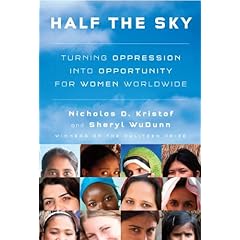
GLAMOUR exclusive! Actor and humanitarian Ben Affleck talks to Pulitzer Prize-winning couple Nicholas Kristof and Sheryl WuDunn, who argue that helping women is the single surest way to change the world.
August 10, 2009 by Ben Affleck

Husband-and-wife team Kristof and WuDunn with their son Gregory, then age one, in Tiananmen Square in 1993
Ben Affleck: I’m the amateur here, so I’ll try not to embarrass myself doing this interview. Let me start by asking: What was the impetus for writing your new book, Half the Sky?
Sheryl WuDunn: It started when we were in China after Tiananmen Square [for The New York Times]. It was terrible—students were protesting and there was a military crackdown and several hundred people were killed. But the following year, we went around the countryside and started thinking we had been covering the wrong story. In the villages of China, we saw things like female infanticide. We discovered that, due to the policy [that every couple could have only one child], there were 30 million missing girls in China at that time. And we realized the prejudice against girls wasn’t just in China, but in Korea, all of Asia, India, Pakistan and Cambodia.
Nicholas Kristof: The gender inequity was utterly pervasive and extraordinarily unjust. It seemed to us the modern analog of slavery—today it is the paramount moral challenge that society faces.
Affleck: I’ve read that societies with women in charge are more successful. Is that true?
Kristof: The evidence has really been growing that if you start economic empowerment efforts with men, often the result is that they buy a lot of beer. When you direct the same efforts at women, the likely result is that their kids get educated.
Affleck: One of the things in your book that I find difficult to understand is the extent to which women perpetrate violence against other women. Why aren’t women more protective of one another?
Kristof: There’s a perception that men are the culprits of the terrible things done to women. Often they are, but there is no worse oppressor to women and girls in much of the world than the mother-in-law.
WuDunn: It’s frustrating to be looking in, and to say, “How come they don’t get it?” But it’s the rules of their culture.
Kristof: There’s sometimes a tendency to think there’s nothing we can do about these [issues], but there is. China used to be just about the worst place in the world to be born female. Sheryl’s grandmother had her feet bound, but these days no one has their feet bound, and women really are the dynamos behind the economic industrialization of China.
Affleck: It’s pretty impressive [that] you guys seem to get along well, work well together, the whole thing.
Kristof: The truth is that if you can raise kids, coming up with a book together is much easier. A book doesn’t play one of you against the other. A book doesn’t look at you with really sad eyes. If you can figure out the tough issues with child rearing, then a book is a piece of cake.
Affleck: In writing the book, was there a story that was particularly painful or moving to either of you?
WuDunn: Some of the most memorable stories are inspiring. One is the story of a woman [in Africa] who was considered the dog of her family. Her younger brother would bring his homework home and she would do it for him. He would take tests and do horribly. Then the family discovered it was the sister who was doing the homework, and so they let her learn. Now she is in the U.S. getting her Ph.D. Talent is everywhere, but opportunity is not. If you give opportunity to women, there’s no telling where they can go. |


 发表于 2009-8-19 12:26:22
 楼主
楼主